Reviews / Favero Assioma DUO review: a pedal-based power meter that genuinely takes your cycling to the next level
Favero Assioma DUO review: a pedal-based power meter that genuinely takes your cycling to the next level
The Assioma DUO is a dual-sided power meter (measuring left and right separately) with a claimed accuracy of ±1%, ANT+/Bluetooth connectivity and 50+ hours of battery life. For triathlon or serious cycling, it is one of the best upgrades: it gives you real control in intervals, better pacing in races and measurable progress over time.
Video (YouTube Shorts)
👍 Pros
- Genuine dual-sided measurement (left/right), not an estimate
- Claimed accuracy of ±1% and Active Temperature Compensation (ATC)
- 50+ hours of battery life and rechargeable batteries
- ANT+ and Bluetooth: works with most bike computers and apps
- Advanced data (cadence, L/R, Power Phase, Rider Position and more) on compatible devices
- Easy installation: the power meter moves quickly between bikes
- Good upgrade path: you can start with UNO and move to DUO later
👎 Cons
- High initial cost (especially for DUO)
- Requires Look Kéo-compatible cleats (for the standard Assioma DUO)
- For some athletes, L/R analysis can become “noise” if you do not have a clear plan for using it
- If you already have a very good smart trainer and ride 90% indoors, the impact may be smaller (though still useful)
Verdict
If you want to make serious progress on the bike (FTP, pacing, intervals, consistency), the Assioma DUO is worth the investment. It is an upgrade that changes your day-to-day training more than switching from an aluminium frame to carbon, because it gives you objective, repeatable feedback: how many watts you produce, when, for how long and at what cost. For triathlon, where correct pacing is the difference between a good run and a blow-up, a good power meter is one of the smartest purchases you can make.
Gallery
What the Assioma DUO is and why almost everyone wants one
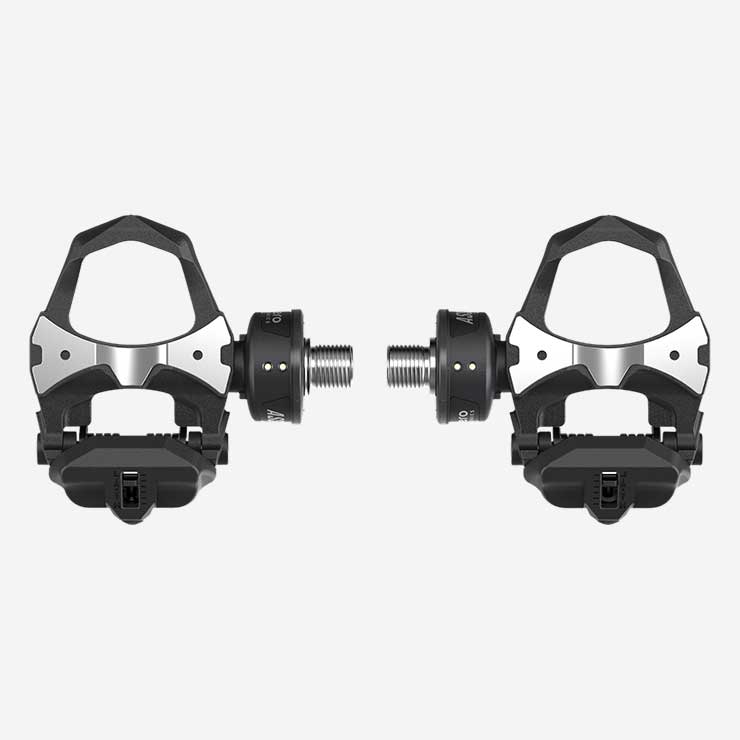
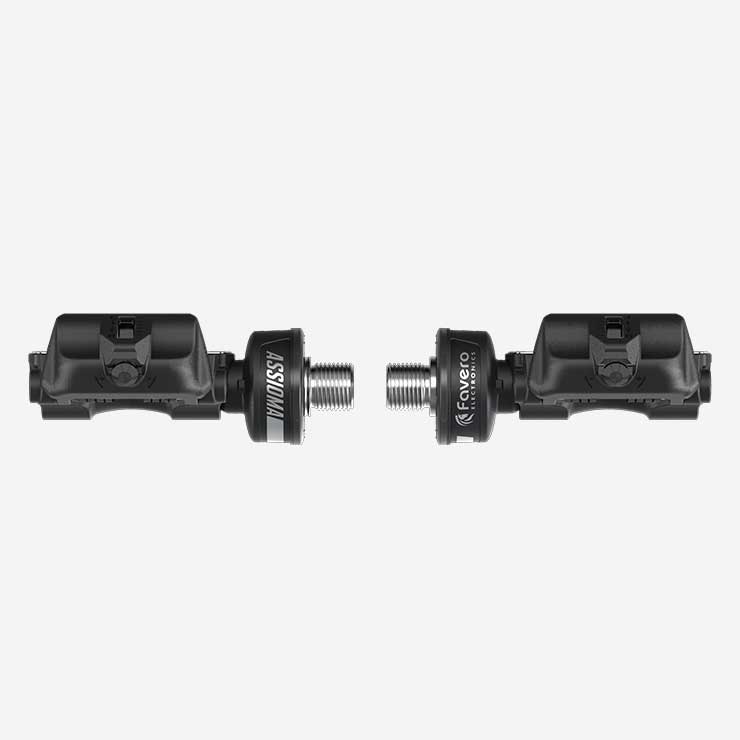
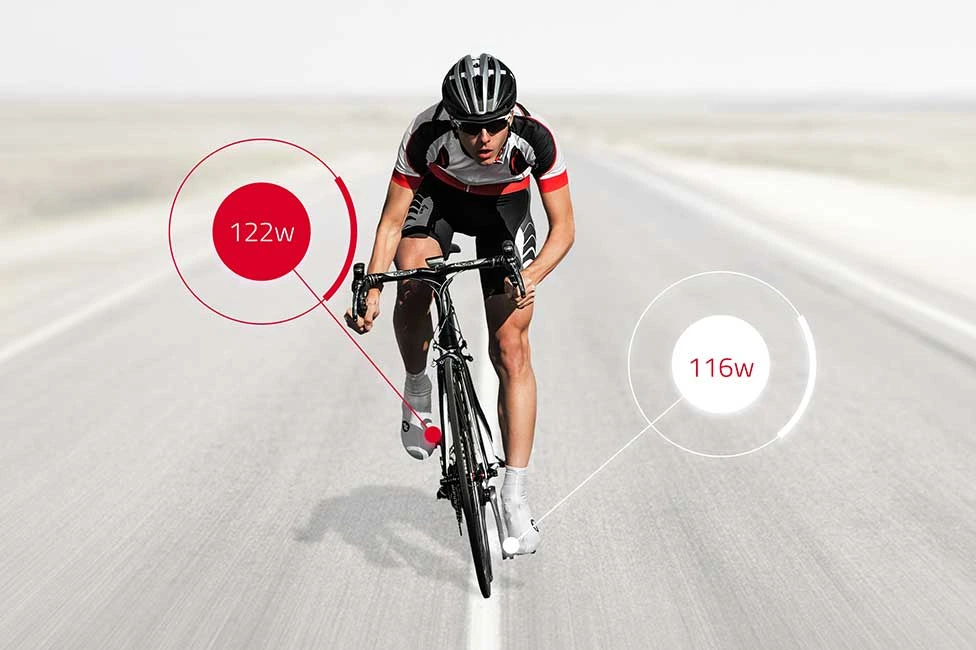
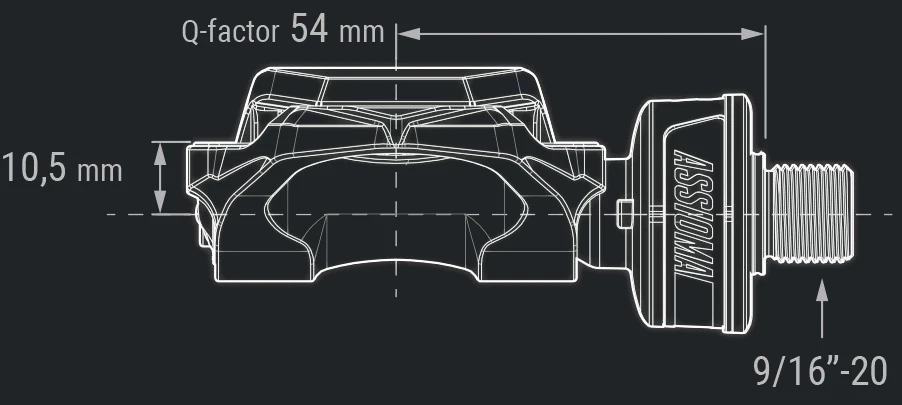
The Favero Assioma DUO is a power meter built into the pedals, with sensors in both pedals (left and right). That means you get total power, but also the real L/R distribution, plus advanced pedalling metrics on compatible devices.
Key specs: claimed accuracy of ±1%, ANT+ and Bluetooth connectivity, rechargeable battery with 50+ hours of battery life, IP67 protection, ATC (Active Temperature Compensation) and compatibility with oval chainrings.
UNO vs DUO vs UNO Upgrade – what is the difference and which to choose
1) Assioma UNO (single-sided)
- Has a sensor only in the left pedal.
- Measures power on the left and doubles it to estimate the total.
- It is the best entry point into power if you want structure but budget matters.
2) Assioma DUO (dual-sided)
- Has sensors in both pedals.
- Measures left and right separately (for real), which reduces errors when your L/R balance is not 50/50 or changes with intensity/fatigue.
3) Assioma UNO Upgrade
- This is the kit that turns UNO into DUO later on.
- In practice, if you start with UNO, you are not “stuck”: you can move up to DUO when you feel you need it.
Quick recommendation:
- Beginner / limited budget / you just want accurate intervals: UNO.
- You want the most accurate data + serious race pacing + L/R analysis: DUO.
- You are not sure yet but want the option to upgrade: UNO + upgrade later.
Who they are for (and who they are not for)
They are for:
- triathletes who want good pacing on the bike and a decent run afterwards (not going “all-out” on the bike);
- cyclists who do intervals (sweet spot, threshold, VO2) and want to execute them repeatably;
- anyone who wants to track real progress (FTP, 20–60 min power, normalised power, TSS and so on);
- people who have more than one bike or travel: the pedals move easily.
They are not necessarily for:
- anyone who rides rarely and does not do structured training;
- anyone who already has an excellent indoor setup and rides almost exclusively on a smart trainer, without going outside (it is still useful, but the return may be lower).
How much it matters to know how many watts you are pushing
Power (watts) is the most stable indicator of effort on the bike.
- Speed (km/h) is heavily influenced by wind, gradient, road surface and position.
- Heart rate lags and depends on temperature, hydration and fatigue.
- Power tells you instantly: “this is what you are producing right now”.
That becomes gold in two situations:
1) Structured training – you do intervals at the right intensity, not “by feel”.
2) Races – especially in triathlon: correct pacing on the bike = a good run. Poor pacing on the bike can completely destroy your margin for the run.
Why it matters so much for intervals
Bike intervals are all about precision and repeatability.
With a power meter:
- you know exactly whether you are in the target zone (e.g. 88–94% of FTP for sweet spot);
- you control overpacing in the first few minutes (the classic mistake);
- you can compare the same session from one week to the next (real progress).
Without a power meter, intervals often end up:
- too easy (you do not stimulate adaptation), or
- too hard (you blow up, get unnecessarily tired and do not recover well).
Garmin compatibility + real-time display + Varia Radar (how they fit together)
Assioma transmits data via ANT+ and Bluetooth, so it connects easily to bike computers (e.g. Garmin Edge) or apps.
Important: it does not “connect” directly to the Garmin Varia Radar; in practice, you connect both (power meter + radar) to the same Garmin Edge. Garmin actually recommends using ANT+ when you have several simultaneous connections (e.g. power meter + Varia radar), for stability.
The major benefit: you see power (and other relevant fields) on the display in real time and can make smart decisions:
- in intervals: you hold the target without getting carried away by adrenaline;
- on climbs: you do not go over your limit;
- in triathlon: you stay in the zone that lets you run well afterwards.
Why it is a more important upgrade than going from aluminium to carbon
A carbon frame can offer:
- slightly lower weight,
- comfort / stiffness / aero gains (depending on the model),
- a more “premium” feel.
But a power meter gives you something more valuable for performance: CONTROL.
- It helps you train exactly the energy systems you want to improve.
- It reduces pacing mistakes in races.
- It turns every ride into a measurable training session.
If you want to raise your level on the bike, a power meter is usually the upgrade with the biggest impact on progress, especially if you follow structured plans (and even more so if you also ride indoors).
Is it worth the investment (especially at this price)?
It depends on your goal.
It is worth it if:
- you have a training plan (or intend to);
- you want to raise your FTP / endurance on the bike;
- you are preparing for triathlon and do not want to “kill” your run with a bike leg that is too hard;
- you want to compare sessions objectively and see your progress.
If you are just starting and your budget is tight:
- UNO can be an excellent entry into power, and upgrading to DUO is still possible later.
What I would set up on a Garmin (and why it makes life easier)
If you have a Garmin Edge, the most useful fields for most triathletes are:
- 3s Power (3-second power)
- Lap Avg Power (average for the lap / interval)
- Cadence
- HR (if you have a strap)
- NP (Normalized Power) / IF (Intensity Factor) for post-ride analysis
In races, Lap Avg Power is gold: it helps you avoid being fooled by short spikes (which burn through your glycogen and cook your legs for the run).
Note: Retailer links may be affiliate links. Prices and availability may change.