Reviews / Gel toe protector – does it help with black toenails or just hide the problem?
Gel toe protector – does it help with black toenails or just hide the problem?
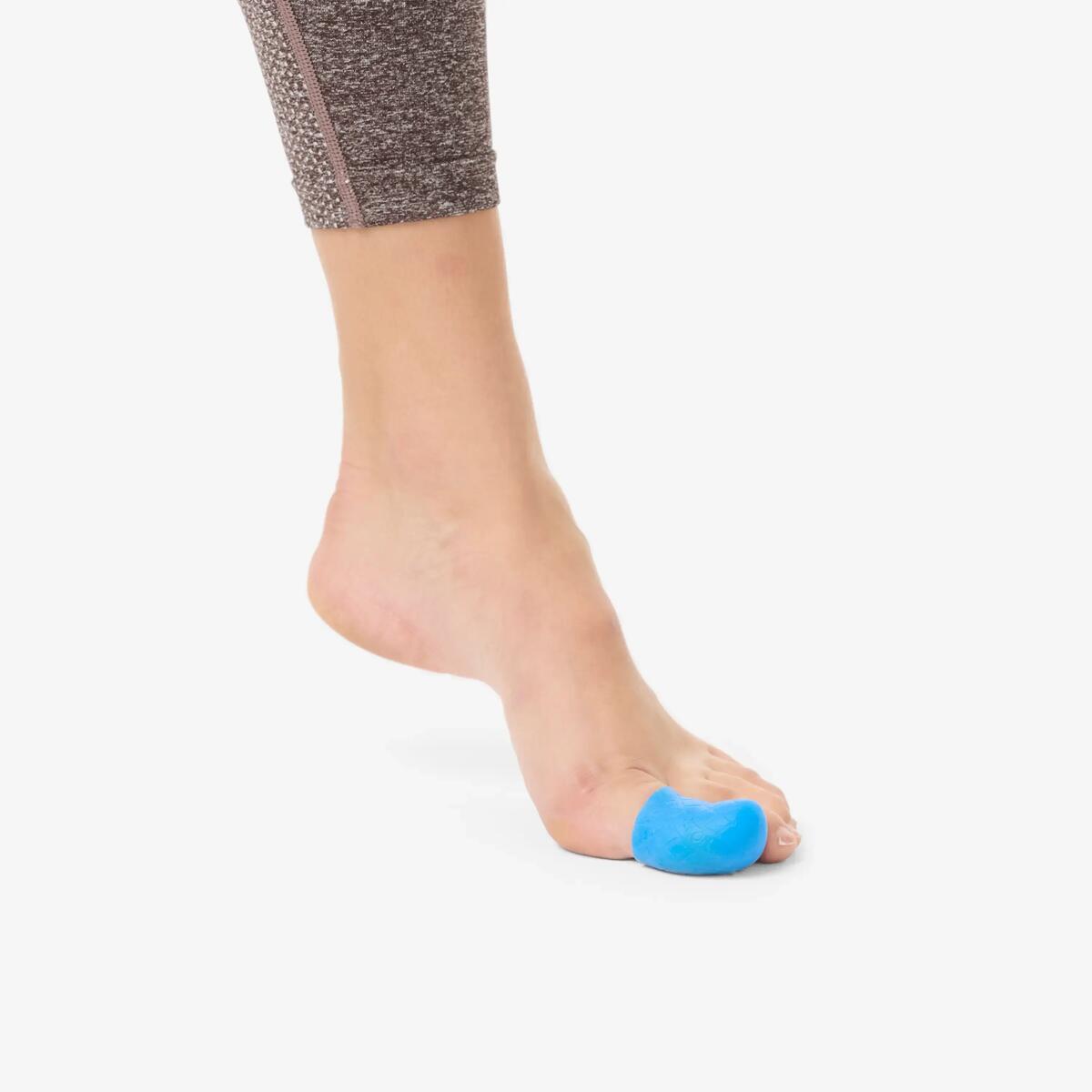
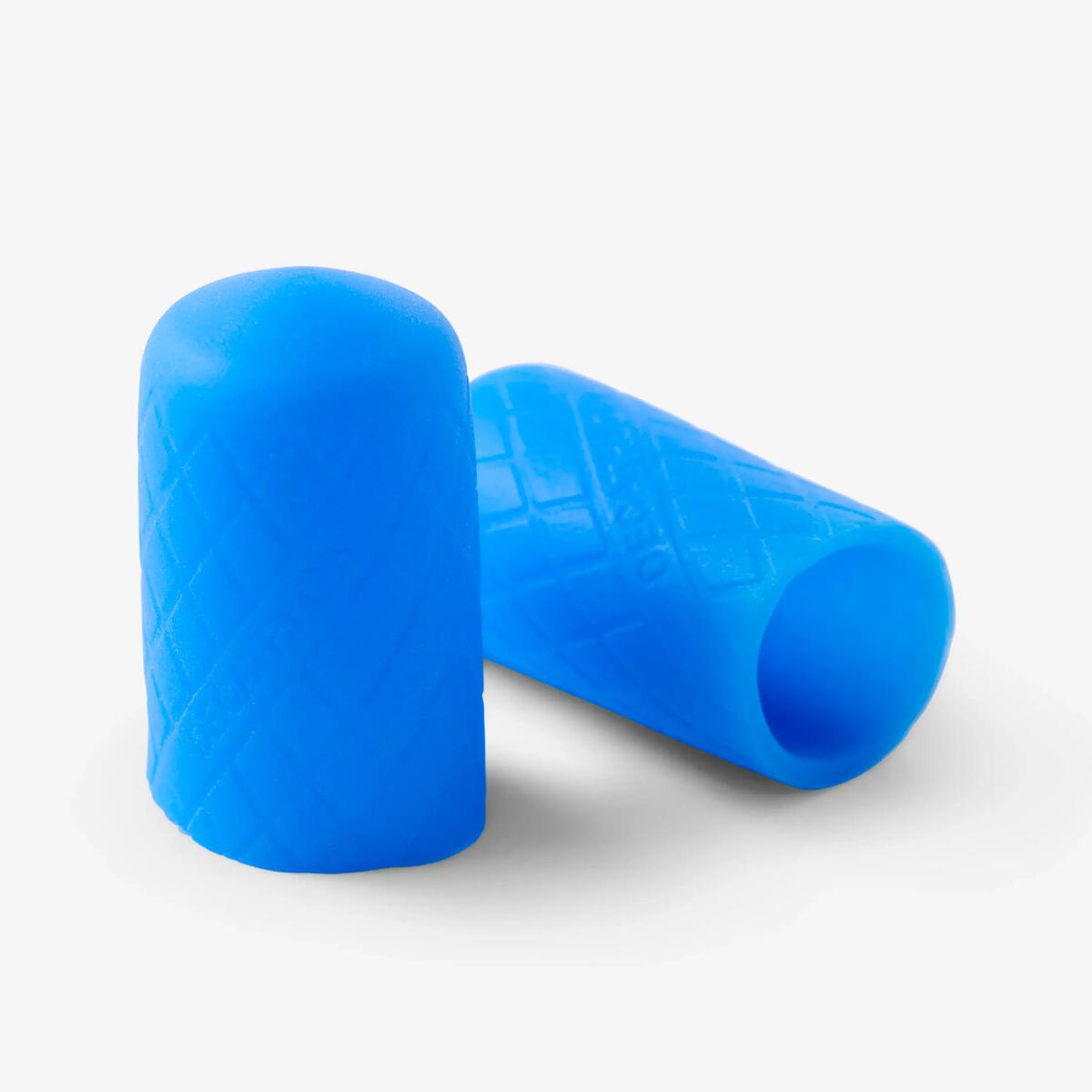
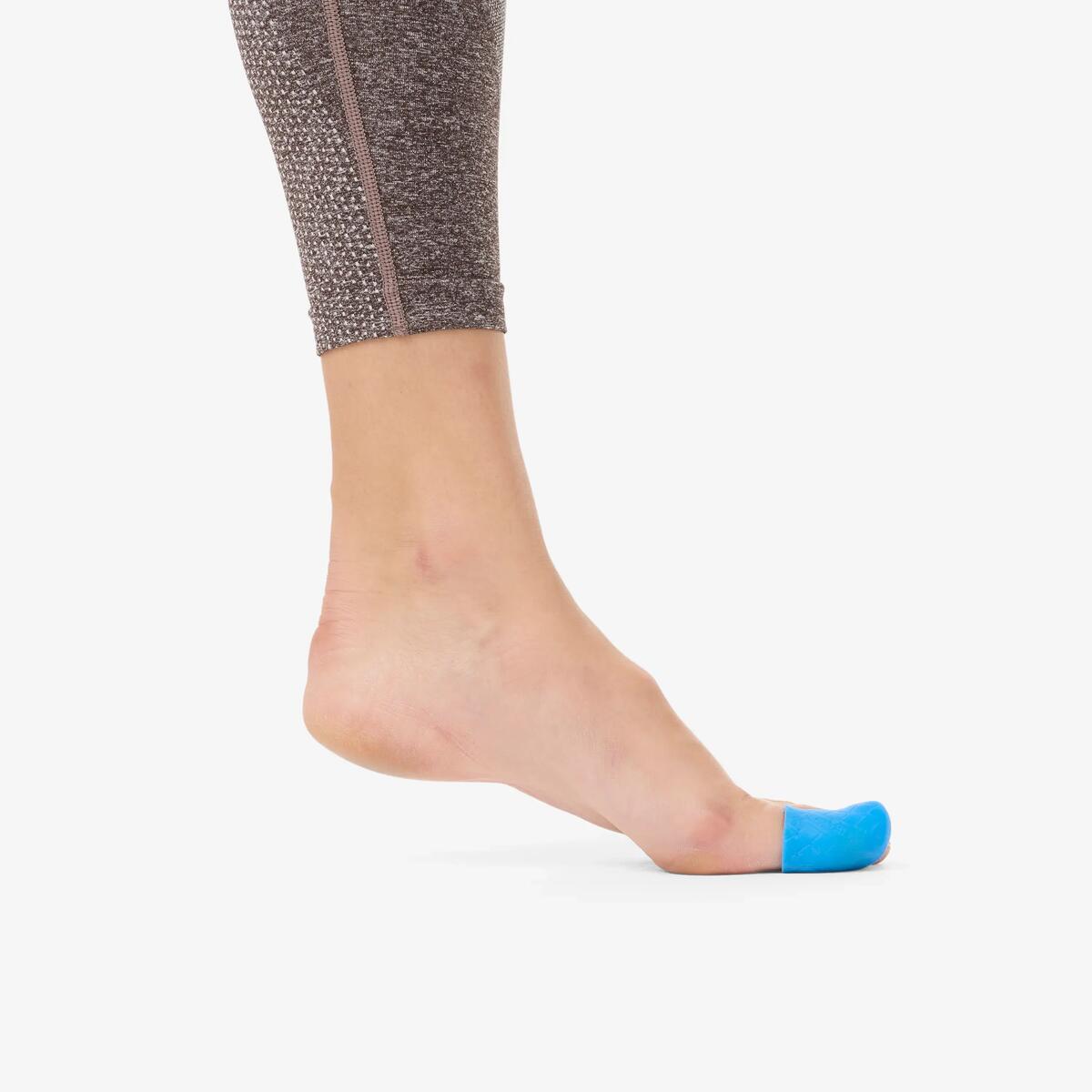
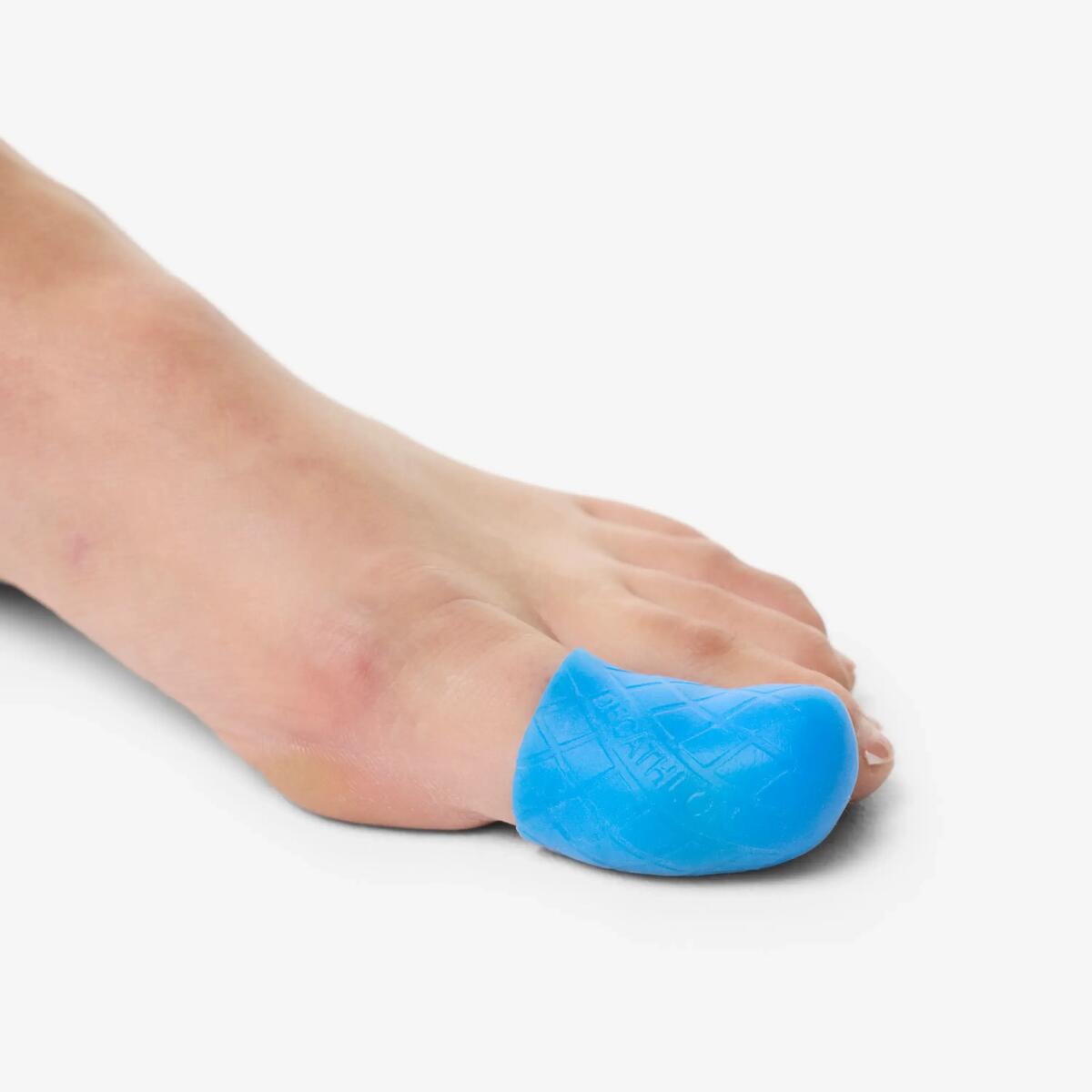
Runner’s black toenail usually comes from repeated microtrauma: the toe hits the front or top of the shoe, especially on long runs and descents. The DECATHLON protector is an elastic cap made of SEBS, a thermoplastic elastomer sold here as “gel”, not silicone. It slips over the toe and adds a layer of cushioning that can reduce pressure, friction and local pain. For a longer or sensitive toe it can be a practical, reusable solution. But it also takes up space in the shoe and does not fix the cause if the shoe is too short, the toe box shape does not suit your foot or your heel slides forward. The evidence on blister prevention supports the mechanism of reducing pressure and shear, but the effectiveness of gel caps has not been directly demonstrated by solid clinical studies. The Tribro verdict: a useful accessory for the right problem, but only after you have checked your shoes, laces, socks and nails.
👍 Pros
- Adds cushioning exactly around the sensitive toe
- Can reduce pressure, friction and local discomfort
- Elastic and can be cut to the right length
- Washable and reusable
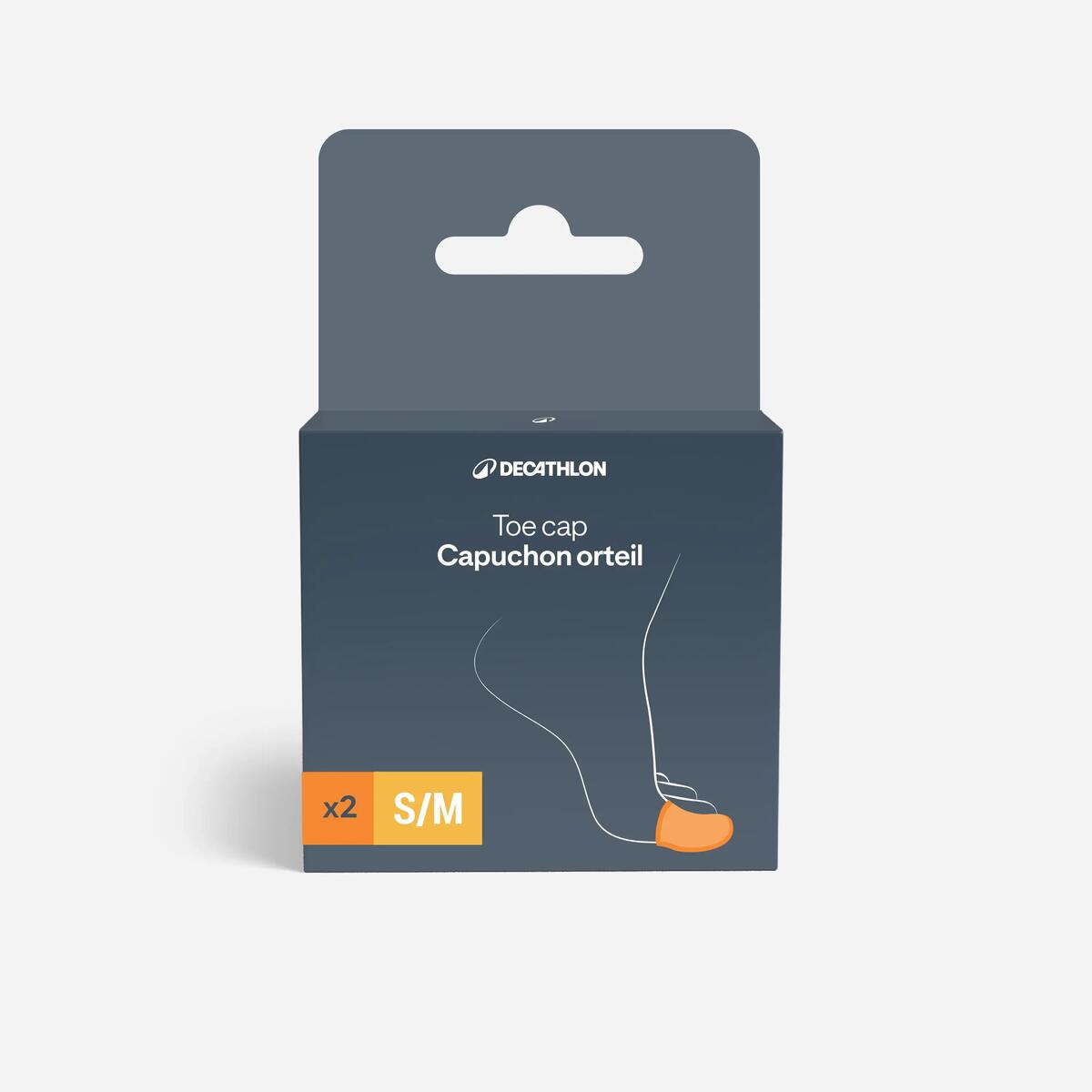
- The pack contains two protectors
- Can be useful for running, trail, hiking and other sports with repeated impact
- Available in two size ranges: S/M and L/XL
👎 Cons
- Does not correct a shoe that is too short or too narrow, or poor heel lockdown
- The gel takes up space and can worsen pressure in an already tight toe box
- Can trap moisture and heat around the toe
- Can shift or roll if cut incorrectly or if the size is wrong
- There are no solid clinical studies directly demonstrating that these caps prevent black toenails
- The price of ≈ €8.50 is quite high for two simple pieces of gel
Verdict
The DECATHLON gel protector is a small, well-targeted solution: it puts soft material between a vulnerable toe and the shoe. For runners with a longer second toe, a sensitive spot or a specific discomfort, it can make a difference on long runs and descents. It gets 8.2/10 for simplicity, reusability and practical usefulness. The score comes with an important condition, though: the cap should be used after you have eliminated shoe size and lockdown problems, not instead of fixing them. If your toe keeps hitting the front, the gel is just cushioning an impact that should be reduced at the source.
Gallery
What runner’s black toenail actually is
A black toenail, medically called a subungual haematoma, is a collection of blood under the nail. In running, it does not only appear after an obvious blow. It is often the result of thousands of small, repeated contacts between the toe, the nail and the inside of the shoe.
On long runs, your foot can swell, and the space that seemed sufficient at the start becomes smaller. On descents, your foot tends to slide forward and your toes hit the toe box with every step. A second toe that is longer than the big toe is often the first to be affected.
Repeated trauma can cause pain, a dark red or black colour, the nail lifting and sometimes losing it. The gel protector tries to soften the contact, not to treat a haematoma that has already formed.
How the gel protector works
The product is a small tube with a closed end. Decathlon calls it a “gel protector”, but in the official composition the material is 100% styrene-ethylene-butylene-styrene (SEBS), a thermoplastic elastomer. So it is a soft material that behaves like gel, but it is not silicone. You pull it over your toe, and the elastic layer sits between your skin, nail, sock and shoe.
The mechanism is plausible: the material can spread pressure over a larger area, absorb some of the shear and cushion brief contacts with the inside of the shoe. These are exactly the types of stress involved in blisters and injuries caused by friction or repeated impact.
Important: the protector does not create space. On the contrary, it takes up a few millimetres. In a shoe with a narrow toe box, adding it can increase compression rather than reduce it. That is why you should test it first on a short run.
What research says about pressure, shear and gel protectors
A comprehensive review of blister prevention explains that the injury occurs through repeated shear deformation within the skin. Bone movement, friction force and repetition are the three essential components. Reducing pressure and absorbing shear are therefore reasonable mechanical strategies.
The same paper includes gel materials and digital orthoses among the solutions with a theoretical benefit, but stresses that the clinical evidence is insufficient. I did not find a controlled study testing exactly this DECATHLON protector, or a similar cap, in runners and showing a clear reduction in black toenails.
The correct conclusion is more modest: the product has a logical mechanism and can be useful for individuals, but it cannot be presented as a guaranteed method of prevention.
Check your shoes first
If your toes touch the end of the shoe when you stand, if your nails press against the top or if your foot slides forward on descents, the main problem is the shoe or how it is secured.
The shape of the toe box matters as much as the number on the label. A shoe can be long enough but too pointed for the shape of your toes. A crossover study published in 2024 showed that toe box shape changes how the foot moves and deforms inside the shoe – factors relevant to the risk of toe trauma.
Leave room for your feet to swell during long efforts, try shoes on towards the end of the day and test them with the socks you will wear. For trail and descents, a heel-lock lacing technique can limit forward sliding, provided the shoe’s shape already suits you.
Nails and socks can change a lot
A nail that is too long comes into contact with the front of the shoe sooner. Cut your nails straight across, short enough that they do not hit, but without cutting aggressively into the corners. A sharp edge should be filed, not left to snag your sock.
Moisture increases friction forces, and a wet, wrinkled sock can create pressure points. The literature on blisters shows that sock material and construction matter, but there is no single fibre or system that works for everyone. Technical socks that manage moisture well and do not wrinkle are a better starting point than thick cotton that stays wet.
The gel protector can be used with a technical sock, but the combination needs checking so that it does not become too bulky.
How to use the DECATHLON product
The protector is available in S/M for sizes 36–39 and L/XL for 40–47. It is sold as a set of two and can be adjusted in length. Cut it gradually with clean scissors, because a protector that is too short can shift more easily.
Put the cap on clean, dry skin, without wrinkles. Pull your sock carefully over it and check that your toe does not become numb, cold or throbbing. Wear it for 20–30 minutes the first time, then on a short run, before a long run or a race.
After use, wash it according to the manufacturer’s instructions and let it dry completely. Do not share it with anyone else and do not put it over open wounds, infected skin or a burst blister.
When it makes the most sense
The product makes sense when the problem is local and predictable: the same toe becomes sensitive on long runs, your second toe sticks out more or you feel light contact with the top of the shoe even though the size and lockdown are correct.
It can also be useful for trail, hiking or sports with stops, changes of direction and descents. In these situations, targeted cushioning can turn a minor irritation into a manageable problem.
It makes less sense if all your toes are compressed, if your nail hits hard on every descent or if you need the gel just to tolerate a shoe that clearly does not fit. In those cases, the real solution is a different size, a different toe box shape or better lockdown.
An important limit: a cap is not medical treatment
If the haematoma is very painful, covers a large part of the nail, appears after a hard impact or you suspect a fracture, a medical assessment is advisable. Do not pierce the nail at home with a needle, paper clip or heated object; drainage has specific indications and risks and must be done in the right conditions.
Seek medical help if you notice spreading redness, local warmth, pus, fever or increasing pain. A dark mark that does not move as the nail grows, or that appears without clear trauma, should also be assessed, because not every discolouration is a haematoma.
People with diabetes, neuropathy, poor peripheral circulation or recurring foot wounds should talk to a medical professional before using products that add pressure inside their shoes.
Is it worth ≈ €8.50?
At ≈ €8.50 for two pieces, the product is not cheap relative to the amount of material. But you are paying for a finished, washable accessory that is immediately available in two sizes and easy to adjust.
If you keep losing the same nail or cut runs short because of a single sensitive toe, the cost is small compared with the potential benefit. If the problem appears rarely and is clearly caused by a shoe that is too small, the money is better spent on sorting out your footwear.
The advantage is that the personal test is simple: a short run quickly shows you whether the pressure drops or, on the contrary, whether the gel makes the shoe too tight.
Tribro verdict: protect the toe, but fix the cause too
The DECATHLON protector does one thing and does it in a logical way: it adds an elastic gel layer around the toe. It can spread pressure, cushion contact with the shoe and reduce discomfort. The fact that it can be cut, washed and reused makes it more practical than improvised plasters that come off once you sweat.
But it is not a shortcut for choosing the right shoes. If your foot slides forward or the toe box has no room for your toes, every step keeps causing trauma; the gel just makes it a little more tolerable.
That is why it gets 8.2/10: very useful for a sensitive spot and a well-understood problem, but with limited direct evidence and the risk of masking unsuitable footwear.
Studies and sources
Sources and product information were checked in October 2026. None of the papers below directly tests the DECATHLON product.
• **Rushton R.** *Friction Blisters of the Feet: A Critical Assessment of Current Prevention Strategies.* Journal of Athletic Training. 2024;59(1):8–21. A review of the mechanism of blisters, pressure, shear and the limits of the evidence for gel materials. Read the full study
• **Ma CZH et al.** *Toe Box Shape of Running Shoes Affects In-Shoe Foot Displacement and Deformation: A Randomized Crossover Study.* Bioengineering. 2024;11(5):457. Read the full study
• **Adams BB.** *Sports dermatology part 1: common dermatoses.* CMAJ. 2004;171(8):851–853. Includes the mechanism of “jogger’s toe”, caused by the nail repeatedly hitting the shoe. Read the full study
• **Sequeira Campos MB et al.** *Subungual Hematoma.* Journal of Education and Teaching in Emergency Medicine. 2023. A clinical overview of subungual haematoma and its treatment. Read the article
• **DECATHLON – Gel Toe Protector:** price, sizes, material, set and instructions for use. See the product on Decathlon
Note: Retailer links may be affiliate links. Prices and availability may change.